Queensland’s State-wide Indicators Framework (SWIF) is a multi-part system for data collection, analysis, collation and visualisation which brings together consistent, evidence-based data on natural resource management program achievements from across the state.
Every six months, organisations receiving funding through a range of Queensland Government programs are required to submit monitoring data to NRM Regions Queensland. This data is compiled into a single, state-wide spatial dataset.
The data shows progress towards outcomes such as improved vegetation or land condition, as well as providing ‘widgets’ such as the number of trees planted, the length of fencing installed, and similar outputs. Importantly, this data can be used to review projects internally and inform adaptive management and continuous improvement.
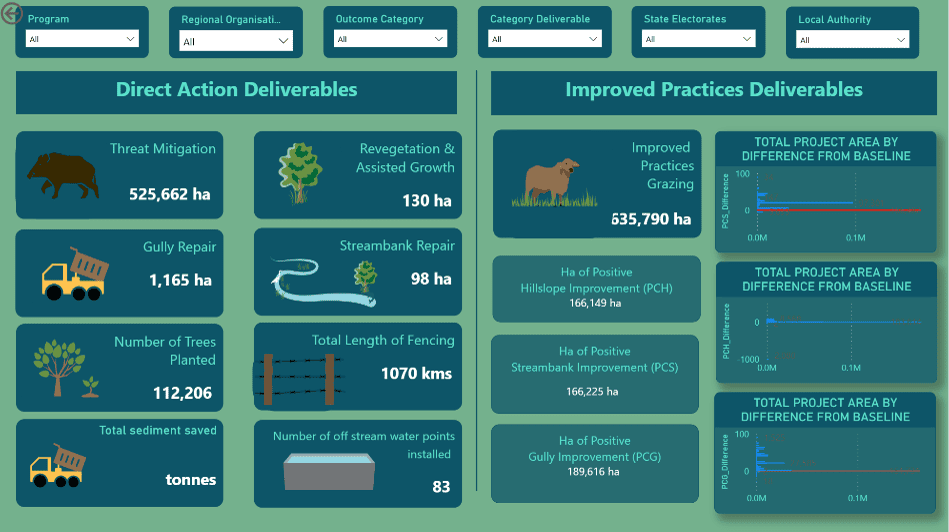
SWIF Dashboard showing Queensland NRM outcomes
To achieve this level of consistent outcomes reporting, a number of monitoring methodologies were developed, involving project staff from the state’s regional NRM organisations, the Queensland Government, and technical experts. Custom-built apps support easy and efficient field-based data collection, with GIS officers then using SWIF processes and back-end scripts to extract and process data consistently.
The ability to generate a state-wide dataset from this system is entirely dependent on everyone using the same methodologies, tools, systems and processes in the same way.
From data to insights: The SWIF Dashboard
But it’s not enough to have a large dataset about program achievements — the information generated needs to be clearly communicated.
As part of the SWIF system, NRM Regions Queensland has built an interactive dashboard using Microsoft PowerBI — a data visualisation and reporting tool. This dashboard displays SWIF data and enables users to interact with the information and tailor it to their interests.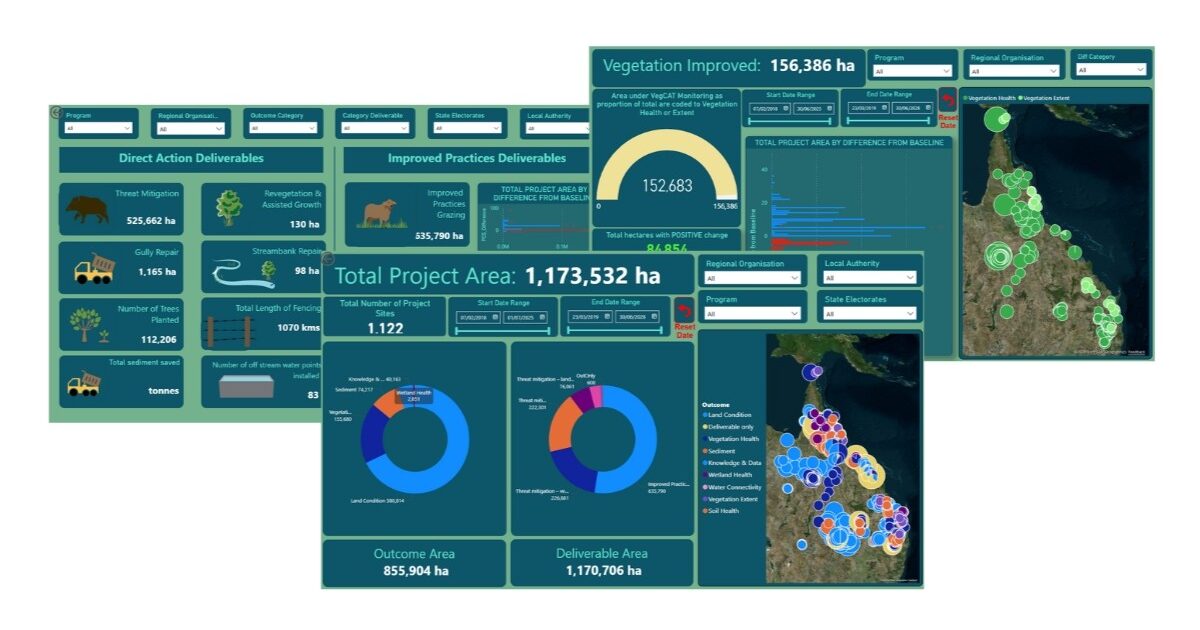 The dashboard is publicly available, with eight webpages of visuals providing differing levels of detail (see above). Users can filter by delivery organisation, individual outcomes, dates, as well as by state electorate and local government areas – a valuable function for departmental staff who need to brief politicians, usually with limited time to consult individual project delivery partners.
This dataset is the culmination of many hours spent by project teams working with land managers and the community to improve the condition of Queensland’s land and water resources. To help provide context to the statistics, the dashboard also displays Project Stories, simple two-page summaries that highlight the people, innovations and challenges involved in delivering these projects. It also showcases the diversity of work being undertaken across the state’s varied landscapes.
The full SWIF system — from data collection through to the SWIF Dashboard — has multiple moving parts and has taken a number of years to develop, refine and embed within the day-to-day operations of regional NRM organisations and other not-for-profit groups, such as Landcare groups and catchment care associations.
Key to its success has been the long-standing partnership with the Queensland Government, as well as the technical input and dedication of NRM project staff, who were prepared to try something new, fail, learn and then improve.
“Consistent and long-term state-wide data collection on NRM project achievements is still the exception rather than the norm. Public accountability for project impact is vital, and the SWIF system delivers this — whilst also telling a compelling story about the scale and reach of NRM investment. A public-facing dashboard to share this story is essential and a key part of our work.” Chris Norman, CEO NRM Regions Queensland
Expanding SWIF under the NRM Expansion Program
The value of the State-wide Indicators Framework will become even more evident as it is expanded to tell the story of a broader set of outcomes funded through the Queensland Government’s Natural Resource Management Expansion Program (NRMEP).
This new program will directly benefit from the previous investment into SWIF through the Natural Resources Investment Program (2018–2022) and the Natural Resources Recovery Program (2022–present). However, NRMEP projects will require new methods and analysis scripts to be developed, as well as a revamped SWIF Dashboard to help communicate achievements.
While the dashboard is a useful way of displaying the information generated from the vast quantities of SWIF data, it needs to be complemented by other communication products and processes. This is required to deliver return on investment for the development and maintenance of SWIF, and importantly the effort invested by project teams in collecting the data to highlight the difference NRM funding makes to our natural assets.
This project is funded by Queensland Government’s Natural Resources Recovery Program.