
Projects improving thousands of hectares of key koala habitat will be supported by a new monitoring tool, KoalaCAT, launched on Wild Koala Day (3 May 2026).
Koalas remain a priority threatened species for conservation action at federal, state and local levels.
Four projects, delivered under the Queensland Government’s Natural Resource Management Expansion Program (NRMEP), focus on reducing key environmental threats and improving habitat connectivity across landscapes:
- Ensuring Thriving Koala Populations (Southern Queensland): Southern Queensland Landscapes is improving 300 hectares of habitat through fire management, reducing predation and invasive species impacts across 17,000 hectares and installing koala ‘bridges’ over wild dog exclusion fences.
- Threatened Species Resilience (Southeast Queensland): Healthy Land & Water is enhancing habitat resilience for vulnerable wildlife, including koalas, through threat reduction activities and improved fire management across 3,250 hectares.
- Improving Koala Habitat and Connectivity (Mackay Whitsunday Isaac region): Reef Catchments is undertaking on-ground works to improve the condition and connectivity of 57 hectares of prime koala habitat from Koumala to the Eton Ranges.
- Nature Positive Fitzroy Farms (Brigalow Country): FBA is working directly with land managers to deliver large-scale biodiversity and land condition outcomes across 17,680 hectares, improving habitat for threatened plant and animal species, including koalas, within Brigalow ecosystems.
With multiple regional NRM organisations working to improve koala habitat through the NRMEP, a consistent way to measure success was needed. To address this, the Koala Condition Assessment Tool (KoalaCAT), part of the State-wide Indicators Framework (SWIF), was developed to help NRM practitioners monitor project impacts.
SWIF provides organisations delivering NRM projects in Queensland with consistent methods for collecting project impact data.
NRM Regions Queensland’s Hannah Kaluzynski is part of the team behind the design of KoalaCAT.
“To ensure SWIF remains fit-for-purpose and cost effective, while credible, we took a grassroots approach to developing the KoalaCAT methodology,” said Hannah. “Existing monitoring methods were assessed, but none were quite right. We drew on common elements and addressed gaps to ensure the method could help tell the story of the difference the projects are making.”
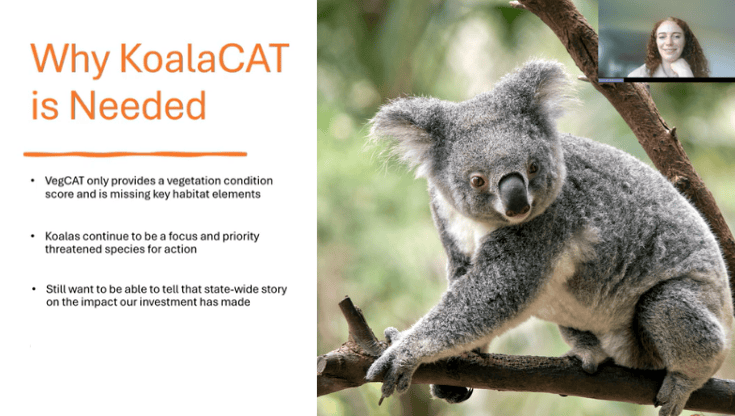
Two online workshops in December 2025, attended by 23 participants from 10 organisations, provided feedback on the proposed KoalaCAT methodology.
The KoalaCAT methodology identifies practical indicators that measure short-term (1–4 years) improvements in koala habitat and align with state and federal conservation strategies.
Lead indicators for KoalaCAT include:
- Koala food and habitat tree recruitment.
- Weed impacts on koalas and their food trees.
- Observations of koala predator activity.
Feedback from industry, government and NRM practitioners helped refine the indicators, ensuring they are practical, measurable and useful on the ground.
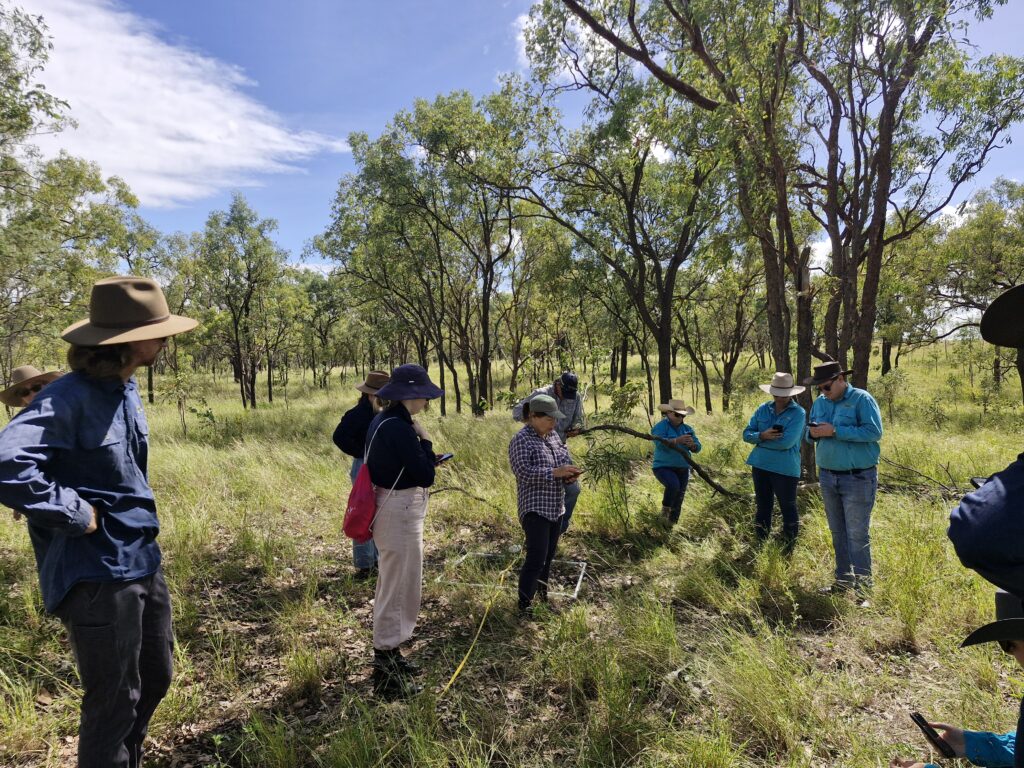
KoalaCAT training with the FBA team near Rockhampton.
Draft guidelines and a data collection app have been developed, with field testing underway since early 2026. Data collected through KoalaCAT is analysed using custom computer scripts and combined into a state-wide dataset that feeds the online SWIF dashboard.
As with all SWIF tools, KoalaCAT will continue to be reviewed and updated to ensure it remains a key method for measuring the impact of koala habitat projects.
This project is funded by the Queensland Government’s Natural Resource Management Expansion Program.