
Queensland graziers are improving soil health and increasing productivity through practical land management changes, supported by the Natural Resources Recovery Program (NRRP).
Over the past three years, landholders have improved practices across 306,322 hectares of grazing land. This has been enabled through on-ground efforts such as the construction of 215 kilometres of fencing and installation of 132 off-stream water points.
Delivered in partnership with regional NRM organisations and other not-for-profit groups, this work enhances land condition while strengthening productive grazing enterprises.
From old foundations to new growth
On the family-run Foyleview cattle property in southern Queensland, new land manager Tim Roberts runs a cattle herd alongside a small flock of sheep and is focused on building long-term resilience and improving land condition.
Historically, cattle have concentrated around limited watering points, leading to uneven grazing pressure. Tim is addressing this through new pipelines and strategically located watering points across the property, with NRRP funding and support from Southern Queensland Landscapes accelerating delivery.
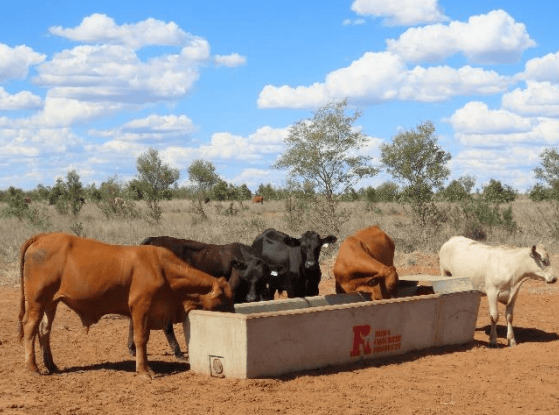
Livestock utilising new water trough at Foyleview. Credit: SQ Landscapes
The improved water distribution is central to Tim’s broader plan to refine the property’s grazing management, ensuring pastures receive adequate rest and recovery. It encourages stock to move away from heavily used areas, easing pressure on vulnerable parts of the landscape while drawing them to underutilised areas. This results in healthier groundcover, stronger root systems, enhanced soil health and more even grazing across the property.
“With SQ Landscapes’ support through the Queensland Government’s Natural Resources Recovery Program, Tim has been able to kickstart major infrastructure upgrades and lead Foyleview into a new era. Clear planning and proactive land stewardship are now shaping the property’s future, ensuring it remains productive and healthy for generations to come,” SQ Landscapes’ Katrina Higgins said.
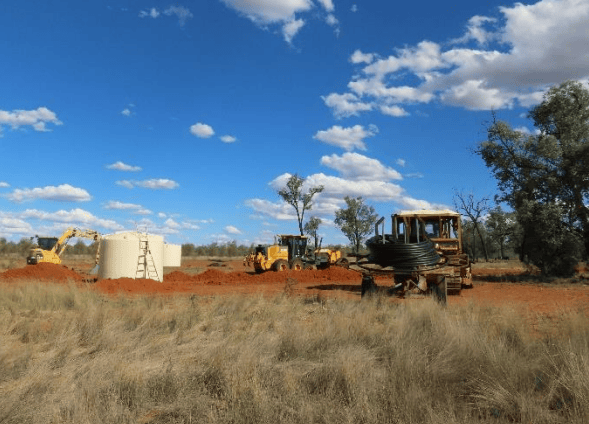
Installation of new water tanks, troughs and pipelines to even out grazing pressure. Credit: SQL
Powering pastures
Further grazing practice change is being delivered through the Sustainable Landscapes across the Inland Burnett project, led by Burnett Catchment Care Association (BCCA).
Dane and Rachael Lehmann run a cattle breeder operation at Tansey in the Burnett River catchment focused on producing the highest quality pasture-raised beef. Their approach centres on soil health as the foundation of nutritious multi-species pastures that provide choice and variety for their cattle.
With NRRP support, the Lehmanns are working with BCCA to develop property management planning that prioritises further improvements to grazing management. This includes continuing to trial multispecies pastures and establishing a rotational grazing trial to assess this approach against a set stocking regime.
The Lehmanns’ goal is to develop a more productive beef operation that improves soil health, land condition, cattle performance and human wellbeing.
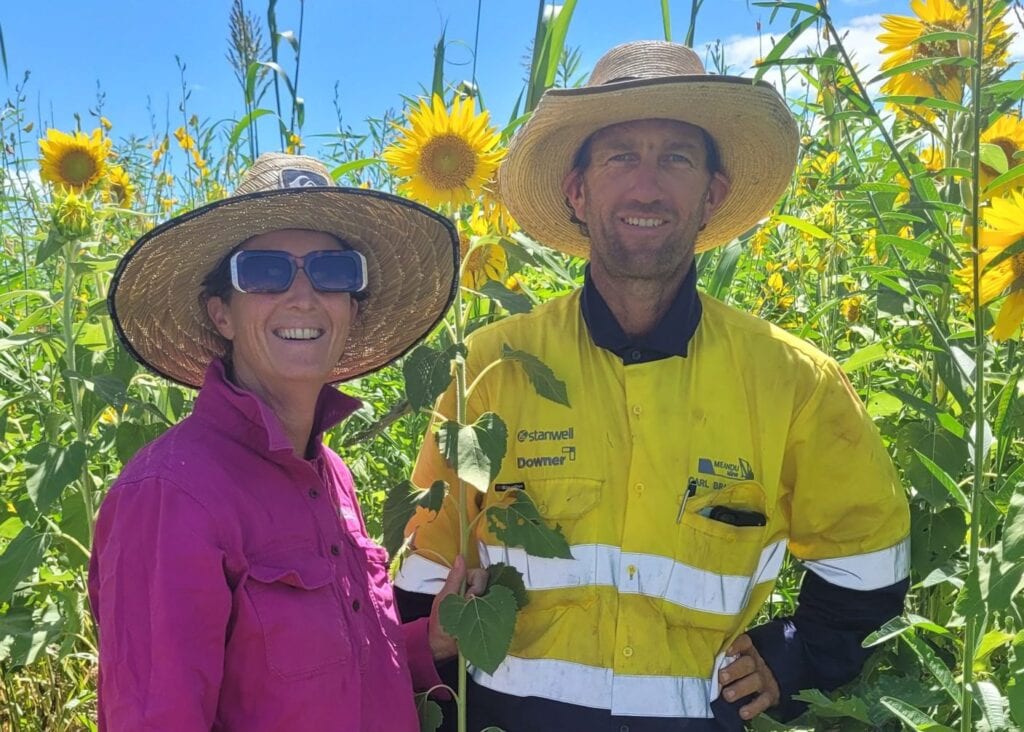
Dane and Rachael Lehmann are owners of the Lehmann Cattle Company at Tansey in the Burnett River catchment. Credit: BCCA
Driving change for long-term productivity
These examples demonstrate how NRRP investment translates on-ground works into landscape-scale outcomes. Fencing and off-stream water infrastructure help distribute grazing pressure, protect waterways and establish healthy groundcover, while targeted practice change, including pasture diversity and rotational systems, builds long-term productivity.
The Queensland Government has provided more than $38 million in grants to Queensland-based not-for-profit organisations under the Natural Resources Recovery Program.
NRRP project outcomes are tracked through the State-wide Indicators Framework, which provides organisations delivering natural resource management projects in Queensland with consistent methods and tools for collecting project impact data. This story uses NRRP project impact data collected from July 2022 to December 2025.
These projects are funded by the Queensland Government’s Natural Resources Recovery Program.