
Biosecurity threats don’t recognise property boundaries, local government borders or regional boundaries.
From invasive weeds and feral animals to emerging animal diseases, protecting Queensland’s environment, agricultural industries and communities requires coordinated action across the entire state.
That is the vision underpinning the Queensland Biosecurity Strategy 2024–2029 – a strategy built on the principle that biosecurity is a shared responsibility, requiring collaboration between government, industry, landholders, Traditional Owners, communities and environmental organisations.
Queensland’s 12 regional natural resource management (NRM) organisations are helping turn that vision into action.
Working across more than 29 regional and remote locations, regional NRM organisations support landholders, local governments, Indigenous ranger groups, industry and communities to address some of Queensland’s most significant biosecurity challenges. Through regional NRM planning, community engagement, surveillance, pest and weed management, habitat restoration and emerging threat preparedness, the sector is helping deliver the objectives of both the Queensland Biosecurity Strategy and the Queensland Invasive Plants and Animals Strategy.
Regional NRM: a trusted network across Queensland
Regional NRM organisations have been embedded in Queensland communities since the mid-1990s.
Together, the sector employs approximately 480 staff across the state, providing a unique network of local knowledge, scientific expertise and community relationships. This strong regional presence enables NRM organisations to work across landscapes and tenures, connecting local priorities with state and national policy objectives.
As trusted regional entities, NRM organisations regularly partner with landholders, Traditional Owners, local governments, industry bodies and community groups to address biosecurity challenges at a landscape scale.
The sector also contributes to a range of biosecurity committees, advisory groups and networks, helping ensure regional knowledge informs state-wide decision-making.
Supporting Queensland’s biosecurity priorities
NRM Regions Queensland worked alongside Biosecurity Queensland and other stakeholders during the development of the Queensland Biosecurity Strategy 2024–2029 and continues to support its implementation.
The regional NRM sector has committed to supporting a range of strategic priorities, including:
- strengthening prevention and preparedness
- supporting effective management approaches for invasive species
- contributing to regional biosecurity planning
- improving communication, engagement and training
- helping promote shared biosecurity responsibilities
- supporting monitoring, evaluation and reporting.
These priorities align closely with the work already being undertaken by regional NRM organisations across Queensland.
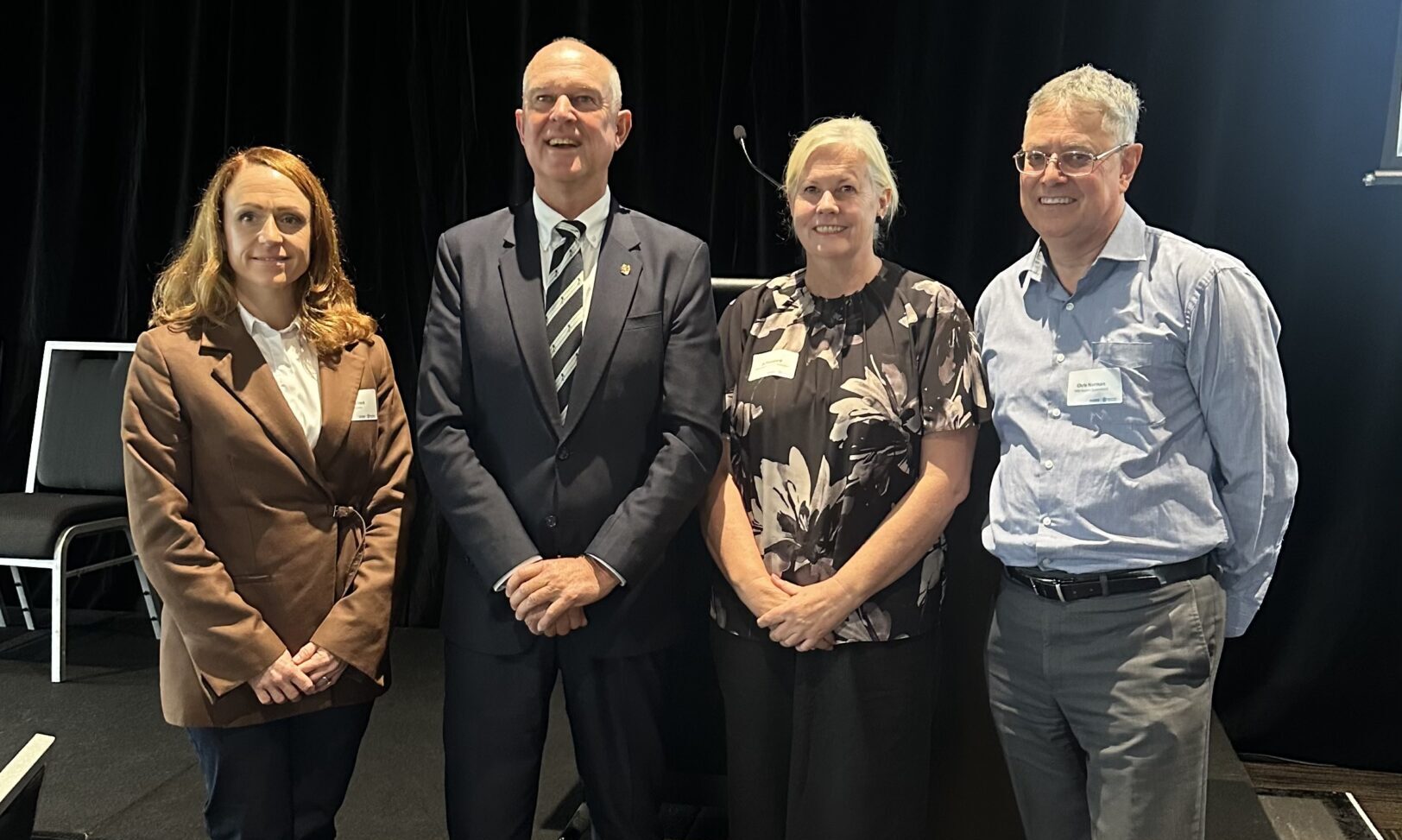
Chris Norman was a keynote speaker at the Biosecurity Partners Forum, held on Friday 19 June 2026. Pictured at the Forum L-R: Niki Ford (CEO Agforce), Tony Perrett MP (Minister for Primary Industries), Jo Sheppard (CEO Queensland Farmers Federation) and Chris Norman (CEO NRM Regions Queensland)
Preparing for emerging threats
One example is a new statewide biosecurity preparedness initiative focused on highly pathogenic avian influenza (H5 bird flu).
Supported through the Queensland Biosecurity Grants Program, the project will bring together representatives from Queensland’s regional NRM organisations to improve understanding of their role during a potential disease outbreak and strengthen preparedness across the sector. Using a train-the-trainer model, participants will undertake specialist training and scenario exercises before sharing that knowledge within their own organisations and regions.
The project recognises the important role regional NRM organisations can play as an extensive network of “eyes and ears” across Queensland’s landscapes, helping identify and respond to emerging biosecurity threats.
Innovation in action
Queensland’s regional NRM organisations are also embracing innovative approaches to tackle invasive species.
Near Hughenden, Desert Channels Queensland has been trialling an unexpected ally in the fight against prickly acacia. Early results suggest camels may help reduce the spread of the invasive weed by consuming seed pods and destroying seeds during digestion.
In Far North Queensland, Gulf Savannah NRM is using satellite-enabled camera technology to remotely monitor and trigger feral pig traps in important habitat areas supporting threatened species.
Terrain NRM has adopted advanced satellite imagery and deep-learning technology to map infestations of wild tobacco bush on the Atherton Tablelands, helping guide targeted weed control efforts while supporting recovery of the endangered spectacled flying-fox.
These projects demonstrate how innovation, science and local knowledge can work together to improve biosecurity outcomes.
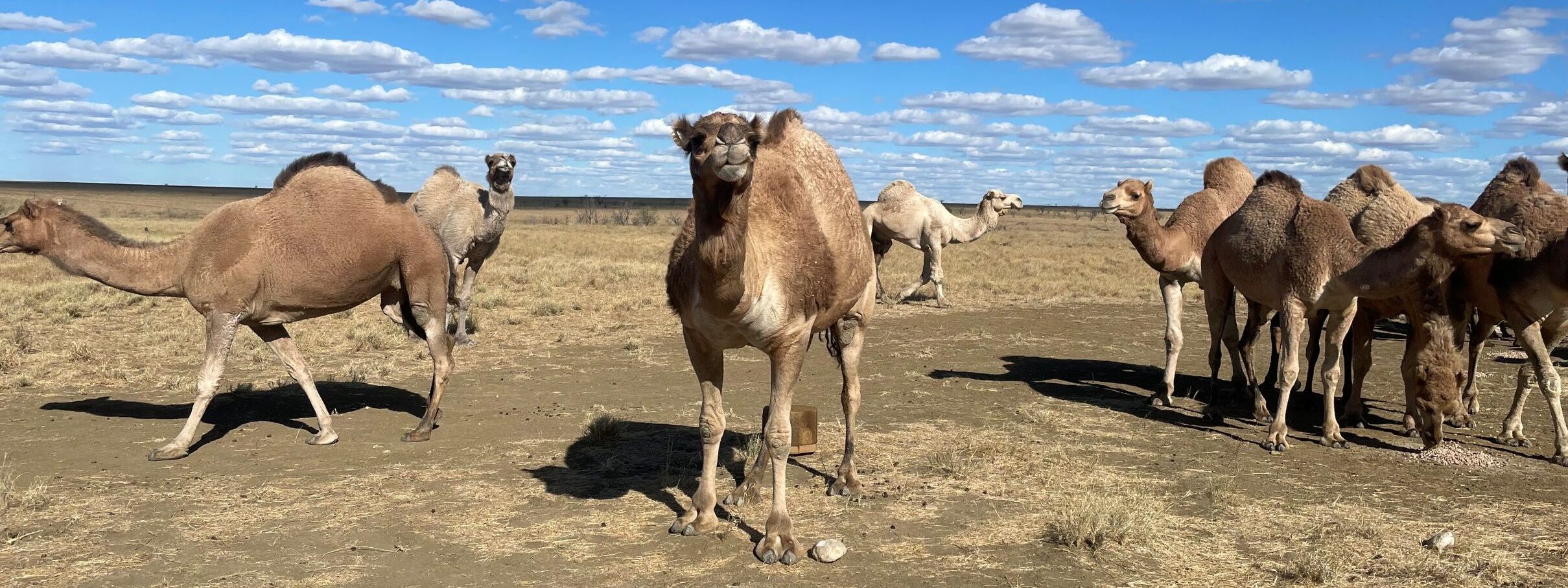
Camels in the Channel Country, deployed for invasive plant control.
Delivering biosecurity outcomes through the NRM Expansion Program
Biosecurity is also a significant component of the Queensland Government’s Natural Resource Management Expansion Program (NRMEP).
Nearly half of approved NRMEP projects include biosecurity outcomes, targeting invasive plants, feral animals and other threats to Queensland’s environmental and agricultural assets.
Examples include:
Southern Gulf NRM’s Feral Pig Reduction project, which is delivering coordinated management activities to reduce feral pig impacts on wetlands, waterways, biodiversity and agricultural land across north-west Queensland.
NQ Dry Tropics’ Fighting Invasives project, which is reducing invasive plant and animal threats in and around Bowling Green Bay Ramsar wetlands, protecting one of Queensland’s internationally significant wetland systems.
Reef Catchments’ Threatened Ecological Communities project, which includes the management of invasive weeds and pest animals to protect and restore nationally significant ecological communities across the Mackay Whitsunday region.
Terrain NRM’s Green Connections project, which combines habitat restoration and connectivity with management of invasive species threatening biodiversity values in the Wet Tropics.
These projects demonstrate the integrated nature of natural resource management, where biosecurity outcomes are often delivered alongside improvements in biodiversity, water quality, threatened species conservation and landscape resilience.
Shared responsibility, shared success
Queensland’s biosecurity system relies on strong partnerships and coordinated action.
Whether supporting preparedness for emerging animal diseases, delivering innovative pest and weed management programs, contributing to regional planning, or helping communities understand their biosecurity responsibilities, Queensland’s regional NRM organisations are playing an important role in protecting the state’s environment, economy and way of life.
As implementation of the Queensland Biosecurity Strategy continues, the regional NRM sector remains committed to working alongside Traditional Owners, Biosecurity Queensland, landholders, industry, landcare and catchment groups, and regional communities to build a more resilient and biosecure Queensland.