Queensland’s regional NRM organisations are playing a key role in one of Australia’s most ambitious soil health projects.
The National Soil Monitoring Program (NSMP) will see approximately 3,000 sites sampled across the country over the next three years — providing vital data to improve soil health and productivity, leading to economic, environmental, and social benefits.
Australia’s NRM sector is supporting the soil sampling initiative, which is funded by the Australian Government through the Natural Heritage Trust and led by CSIRO.
“The NSMP is a cornerstone of the National Soil Action Plan 2023–28 and will contribute to building Australia’s first nationally consistent approach to measuring, monitoring, mapping, and sharing soil information,” said Chris Norman, CEO NRM Regions Queensland and National NRM Lead for the NSMP.
The National Soil Action Plan guides the delivery of the National Soil Strategy, which sets out how Australia will value, manage, and improve our soil for the next 20 years.
National Soil Monitoring Program in Queensland
With 11 regionally based NRM organisations covering the entire state and 25 years’ experience delivering on-ground outcomes, Queensland’s NRM sector is well positioned to support the NSMP through extensive field sampling.
Planning is now underway to carry out soil sampling at more than 850 sites in Queensland over the next three years. Site selection has a strong focus on major agricultural zones.
Queensland’s regional NRM organisations have formed two clusters to deliver the program—with Burnett Mary Regional Group, Healthy Land & Water, Desert Channels Queensland, Fitzroy Basin Association and Southern Queensland Landscapes making up the Queensland South NSMP Cluster.
“In total, the southern cluster will collect 565 soil samples over the course of the project. That will work out as 11.3 tonnes of soil sent for analysis!” said Jayne Thorpe, Business Development Manager at Southern Queensland Landscapes.
In the north of the state, Gulf Savannah NRM, Cape York NRM, NQ Dry Tropics, Southern Gulf NRM, Reef Catchments, and Terrain NRM will form the northern cluster. Plans are currently being drawn up to sample more than 300 identified sites across the vast and varied region.
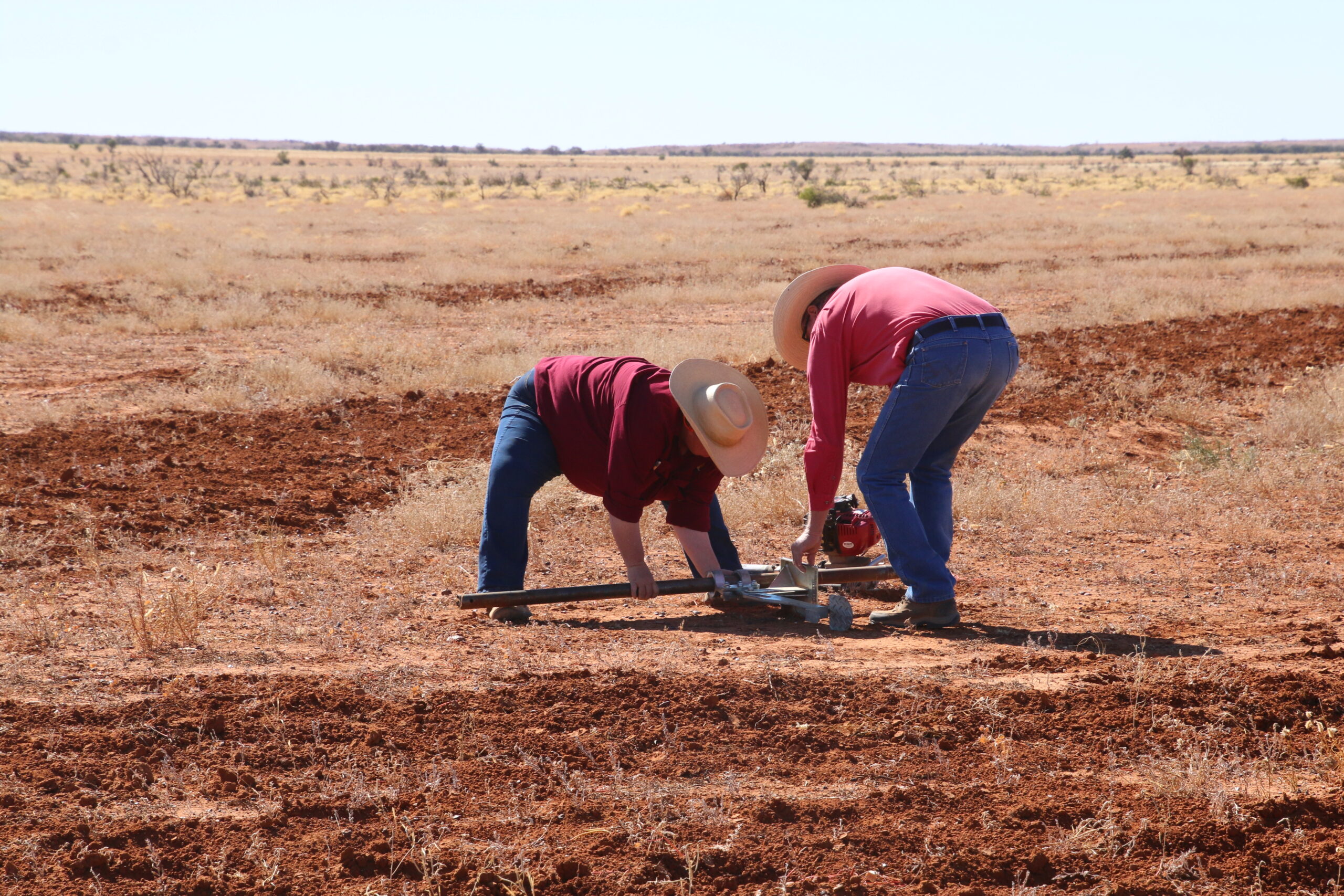
NRM staff will help to collect samples across the state for the National Soil Monitoring Program. This image shows Desert Channels Queensland officers collecting samples near Boulia for an earlier project.
Why healthy soil matters
Soil health can change over time— influenced by land management practices, climate and natural processes—with direct impacts on productivity, sustainability, and ecosystem health.
The NSMP will provide nationally consistent data to indicate trends in soil health and condition. This information will support land managers to make evidence-based decisions to improve soil condition through changes to their management practices.
Policy makers will also be able to use the sampling data to make strategic landscape-scale decisions to support climate-smart, sustainable, and productive agriculture into the longer term.
NRMRQ CEO Chris Norman said the initiative will help to grow the sector’s expertise in soils, build relationships with partner organisations and aligns with other existing soil projects being delivered across the state.
“Queensland’s regional NRM organisations are trusted partners in their communities. Our involvement in the monitoring program will strengthen our long-standing role in helping farmers improve the health and productivity of their land,” he said.
Investing in soil science
Through the Queensland Soil Science Graduate Program, the state’s regional NRM organisations are also helping to cultivate the next generation of soil scientists.
The 12-month development program offers participants experience in the lab, in the field, and through professional networks. The initiative is a partnership between the Queensland Government and the state’s NRM sector, with each graduate working at both a state department and a regional NRM organisation.
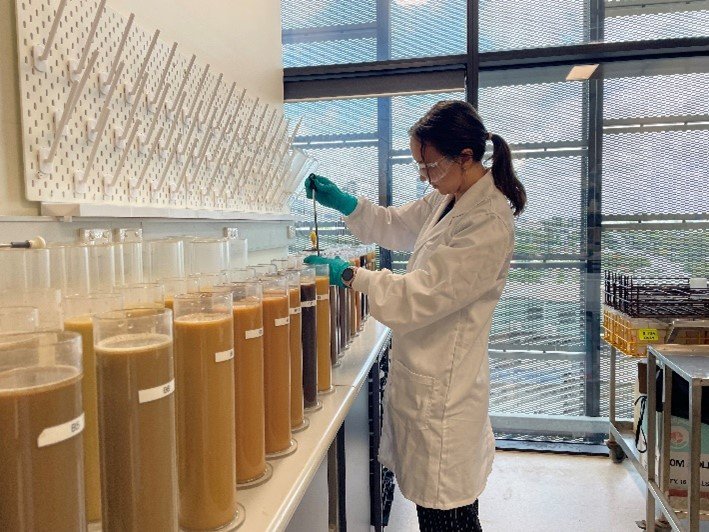
Graduate Mali Eagle gained an in-depth understanding of soil chemistry at the EcoSciences Precinct in Brisbane.
Graduate Coordinator Rachel Cavallo from the Burnett Mary Regional Group said it was essential to have soil scientists now and in the future.
“Soil science is vital to Queensland and all of Australia — it underpins farming, healthy environments, and essential ecological services. Soil connects us all. When we invest in soil science, we’re investing in everyone’s future,” she said.
The program is one more way Queensland’s regional NRM organisations are investing in sustainable land management. Learn more about this year’s Queensland Soil Science Graduate Program cohort.