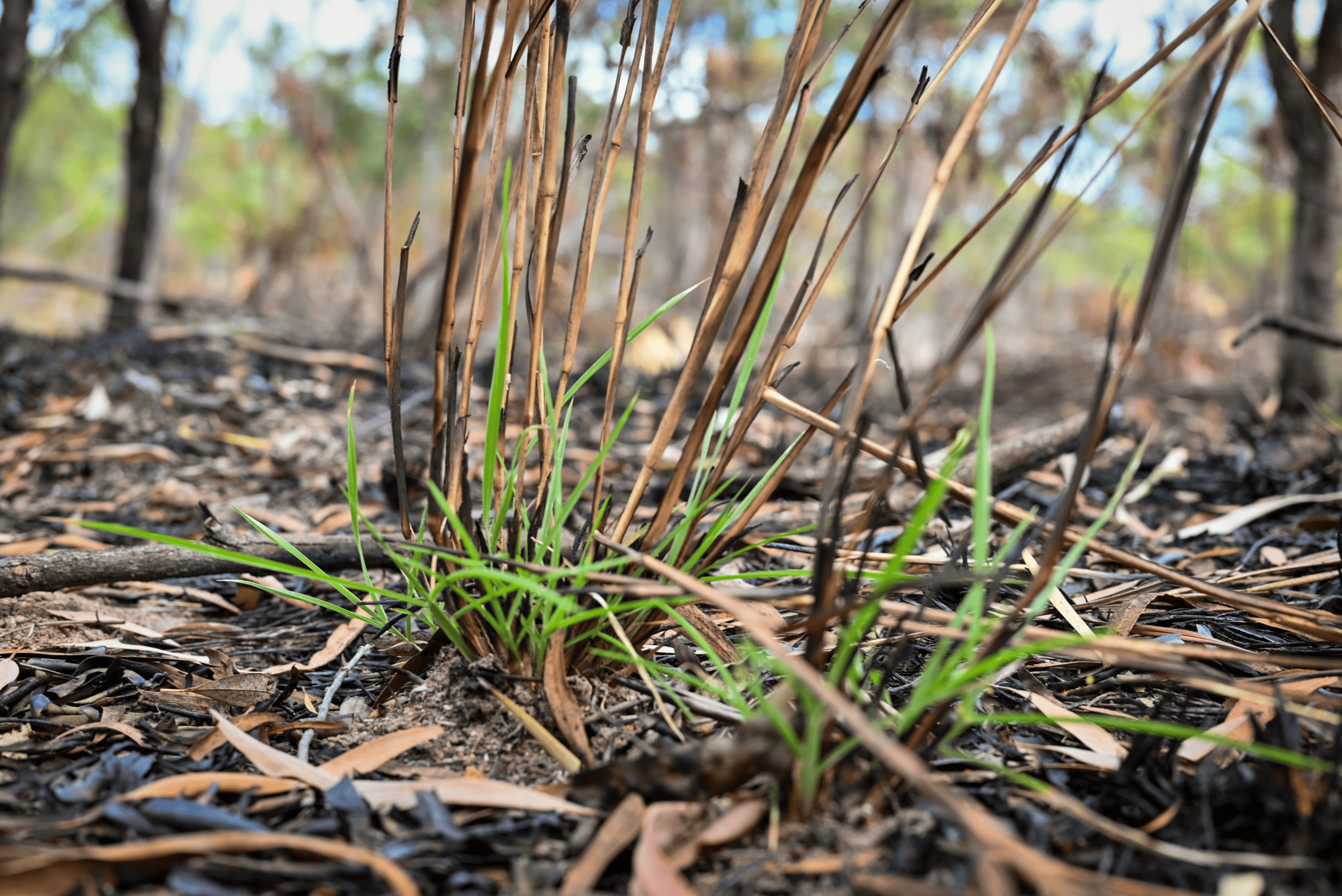
When we talk about fire in Queensland, it’s often about stopping it.
But in the right place, at the right time and under the right conditions, fire can also be an important tool for looking after our landscapes.
Across Queensland, projects funded through the Queensland Government’s Natural Resource Management Expansion Program (NRMEP) are using carefully planned fire management to improve the condition of land and native vegetation, protect biodiversity and help reduce the risk of destructive, high-intensity wildfire.
They’re also helping protect productive agricultural land, crops, livestock and infrastructure.
It’s a good example of something we’re seeing right across the Queensland Government’s flagship NRM investment: an investment in land and soil, water and biodiversity delivering outcomes across the entire landscape.
So, what is a cool burn?
Cool burns are deliberately lit, low-intensity fires undertaken when weather, vegetation and fuel conditions are suitable.
Rather than racing through a landscape at high intensity, these burns generally move more slowly and stay closer to the ground. Done well, they can reduce accumulated fuel while limiting damage to soils and larger vegetation, encourage native grasses and groundcover and create a more varied landscape for wildlife.
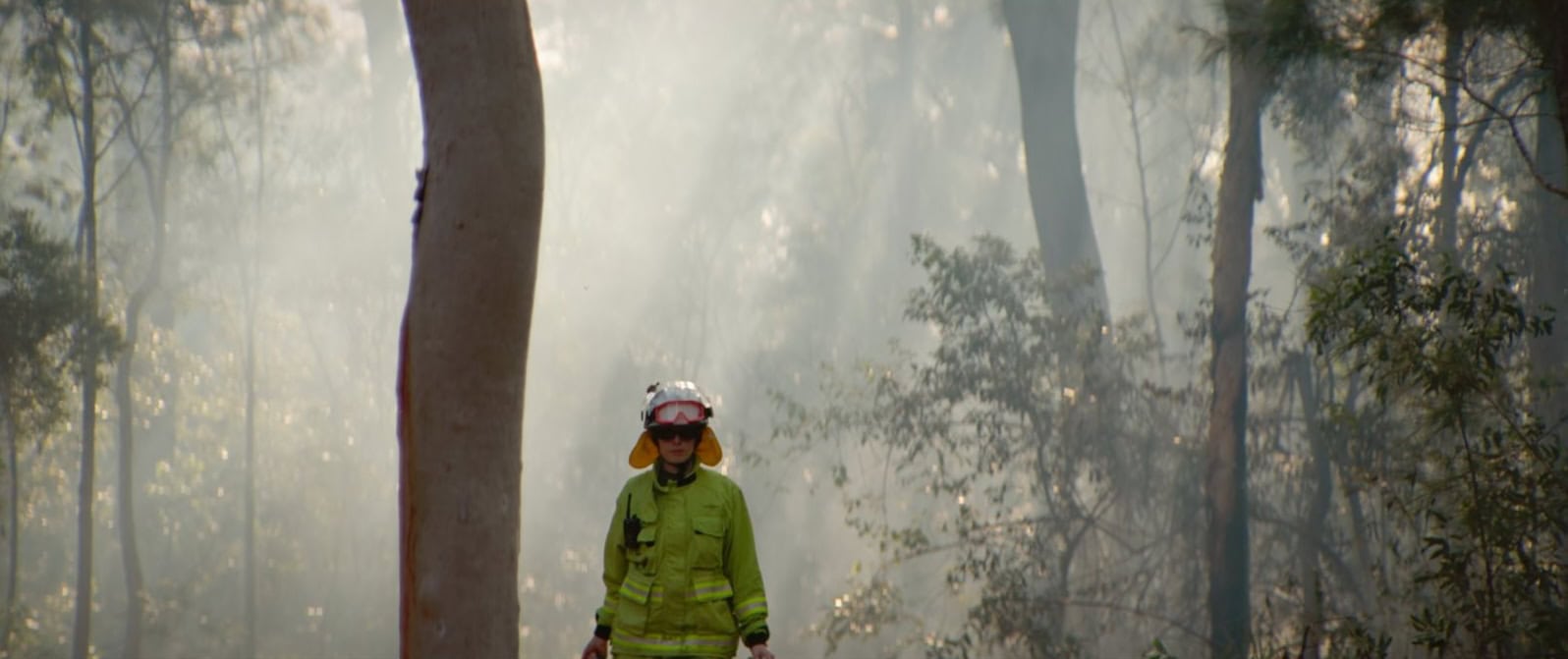
Cultural fire – a nature-based solution for land management.
And while the tools available to plan and monitor fire have changed enormously, the idea of using fire deliberately to manage Australian landscapes certainly isn’t new.
First Nations people have used carefully timed fire to manage Country for thousands of years, with practices varying according to landscape, season and purpose. Today, several NRMEP projects are bringing that knowledge together with contemporary fire science and technology, and the practical experience of graziers, growers and other land managers.
Because there isn’t one recipe for a good burn. Too little fire can increase fuel loads and alter vegetation. Too much fire – or fire at the wrong time or intensity – can damage soils, vegetation and habitat.
Good fire management is about understanding what a particular landscape needs and bringing the right knowledge to the job.
Protecting productive land – and much more
In the Burnett Mary region, BMRG’s Cool Burn Squad is putting that approach into practice in some of Queensland’s productive agricultural landscapes.
The NRMEP project aims to undertake 500 hectares of cool burns, develop strategic cool burn management plans covering 50,000 hectares and train 150 land managers.
BMRG’s Cool Burn Squad is supported by the Queensland Government’s NRM Expansion Program
The immediate objective is practical: better managing fire risk to agricultural land, including grazing country and high-value horticulture such as macadamias, avocados and citrus.
But the same work can deliver benefits for the natural assets NRMEP was established to improve.
Carefully managed fire can help protect soils and groundcover, improve vegetation condition and support habitat and biodiversity. By reducing the risk of intense wildfire and maintaining groundcover, it can also help reduce the erosion and movement of sediment into waterways.
BMRG has also deliberately built Traditional Owner participation into its Cool Burn Squad.
Rather than filling three full-time fire practitioner positions, BMRG redesigned them as six half-time positions, enabling people from the region’s Traditional Owner organisations to work alongside the squad during the burning season. All positions have now been taken up, with organisations participating in different ways according to their capacity.
This means contemporary agricultural land management, practical fire expertise and generations of knowledge about managing Country can all contribute to how fire is planned and used.
Building resilience across whole landscapes
In Cape York, the scale is very different but the principle is similar.
Cape York NRM’s Wildfire Resilience project is working with land managers to improve fire management across large areas through property fire planning, firebreaks and planned early dry-season burning.
By July 2026, planned early dry-season burns had been completed across more than 46,000 hectares on 12 properties, helping improve the resilience of native vegetation to destructive wildfire.
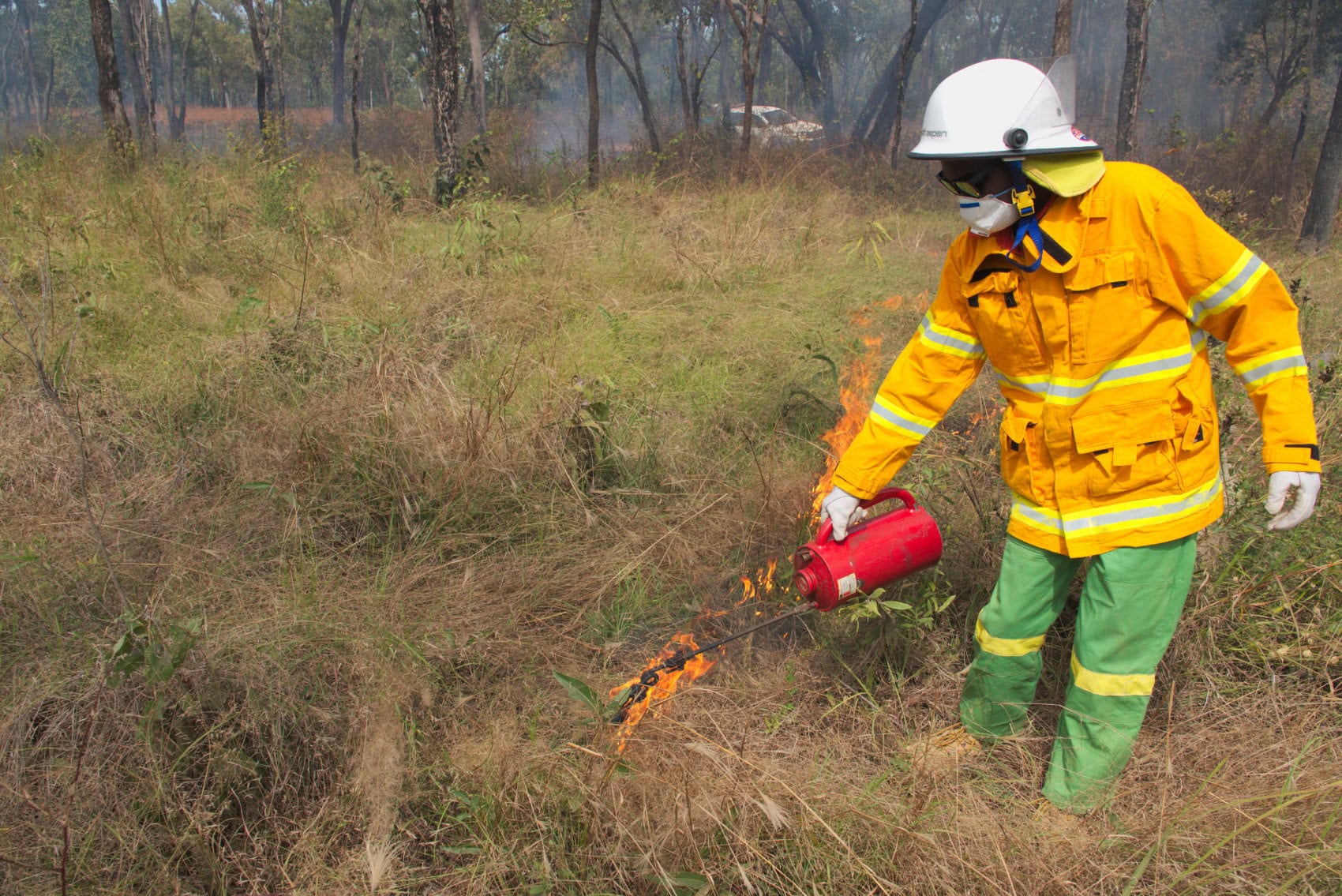
Skilled implementation of controlled burning using a driptorch on Cape York Peninsula
In the NQ Dry Tropics, NRMEP investment is tackling fire alongside two other major pressures on land and biodiversity; weeds and feral animals.
The Fighting Invasive Species Together project brings landholders and land managers together with four Indigenous Ranger groups and includes low-intensity Cultural burning and collaborative fire planning across 2,000 hectares.
Here, First Nations involvement isn’t simply about sharing knowledge – Indigenous Rangers are involved in delivering and monitoring work on the ground.
Recent training supported through the project has brought together Rangers, Elders, NRM practitioners and technical specialists, combining Traditional Ecological Knowledge with contemporary approaches to data capture, photo-point monitoring and reporting.
It’s another example of different knowledge and experience being brought together to tackle several landscape pressures at once.
Fire management isn’t simply about burning more
Healthy Land & Water’s Threatened Species Resilience project shows why that distinction matters.
On a 3,250-hectare fifth-generation grazing property bordering Main Range National Park, NRMEP investment is bringing together weed management, detection dogs, nest boxes and fire planning to protect threatened species.
Here, managing fire is a balancing act. Too little fire can increase fuel loads. But poorly timed fire can also damage habitat and harm the species the project is trying to protect.
A comprehensive fire management plan covers the entire property, supported by field data and camera monitoring to better understand the presence of threatened species at different landscape fire-return intervals.
It’s a useful reminder that good fire management isn’t about simply putting more fire into the landscape. It’s about the right fire, in the right place, at the right time.
From thousands of years of knowledge to satellite data
NRMEP is also helping improve how we measure whether better fire management is actually making a difference.
Cape York’s Wildfire Resilience project is piloting FireCAT, a new assessment tool developed through Queensland’s Statewide Indicators Framework.
FireCAT uses satellite-derived fire history to examine patterns including how much of a landscape burns, when it burns, the size and distribution of fire scars and impacts on fire-sensitive vegetation. It produces an annual fire-pattern health score that can be tracked over time.
Across these projects, knowledge of fire developed over thousands of years is sitting alongside the experience of today’s farmers and land managers, contemporary ecological science and satellite technology.
And they’re all being applied to the same fundamental challenge: how do we keep Queensland’s landscapes healthy and productive?
NRMEP is an investment in Queensland’s land and soil, water and biodiversity. Fire management shows how interconnected those outcomes are. A well-managed fire can help maintain vegetation and habitat. Healthy groundcover helps protect soil. Keeping soil in the landscape helps keep sediment out of waterways. Reducing fuel and breaking up large areas of continuous vegetation can help reduce the impact of destructive wildfire.
At the same time, the work is helping protect farms and infrastructure, strengthen landholder capability and build partnerships across Queensland’s landscapes.
Feature image: Scott Radford Chisholm, courtesy NQ Dry Tropics (Fighting Invasive Species Together project)