
The Natural Resources Recovery Program (NRRP) is helping Queenslanders make a real difference to the environment by championing community-based volunteering.
Through projects that strengthen landscape resilience and encourage sustainable practices, the Queensland Government program provides funding to regional NRM organisations and other not-for-profit groups to address the needs of their communities, including delivering hundreds of local events.
Backing Queensland’s volunteers to make an impact
Established in 2004 to unite and empower local community groups caring for the state’s land and waterways, Queensland Water and Land Carers (QWaLC) has grown into a robust peak organisation, connecting volunteers and partner organisations for greater impact. QWaLC achieves this through representation, advocacy, networking and administering insurance for its 527 member groups.
QWaLC receives NRRP funding to provide these groups with support to keep volunteers safe and practice good governance, complementing other grants they receive. During 2024-25, 52,000 volunteers lent their hand to land and water management outcomes with over 2.4 million volunteer hours contributed. During this time more than 700,000 native plants were raised and planted.
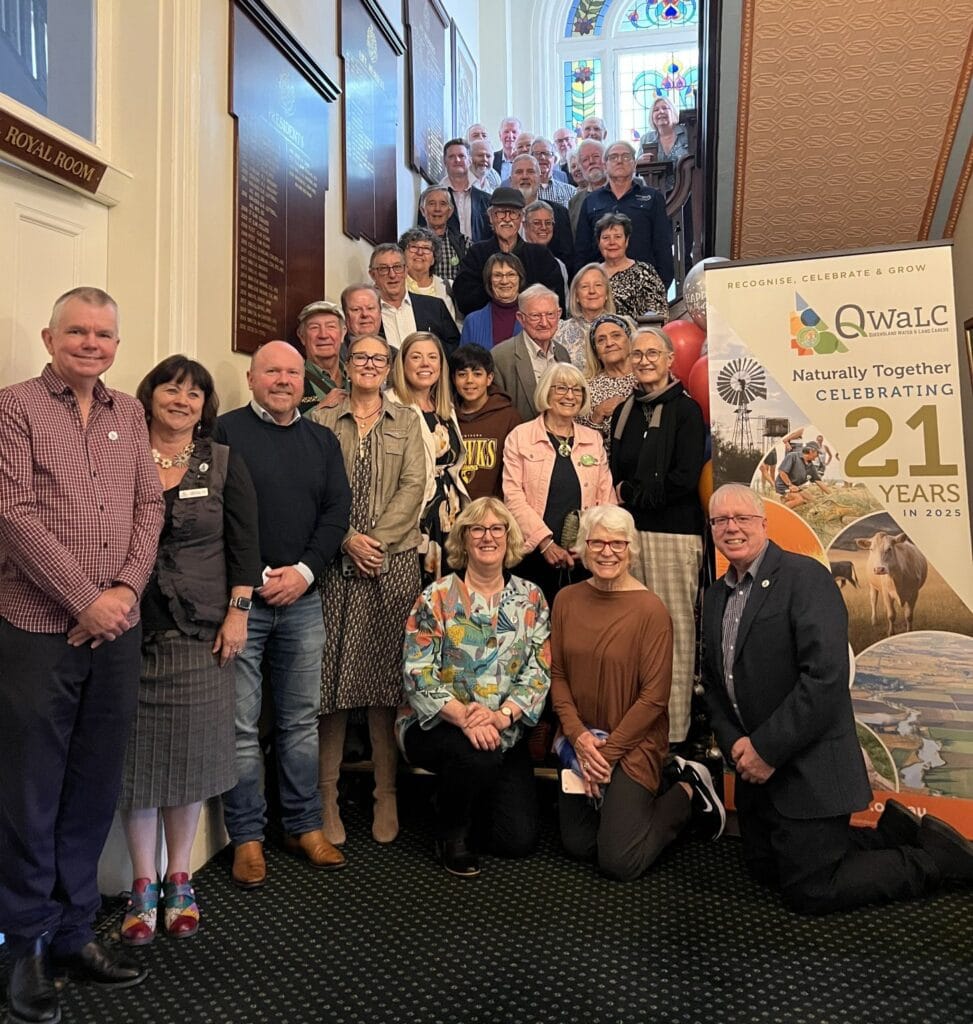
QWaLC held a special event to commemorate its 21 years.
Two million and counting
Noosa and District Landcare received NRRP funding for their Keeping It In Kin Kin project, which is restoring degraded riparian and pasture systems, excluding cattle from waterways and protecting nearly four kilometres of Kin Kin Creek.
Central to this effort is the revegetation of riparian zones, led by the group’s native propagation nursery, helped by 26 volunteers.
Among these volunteers is a dedicated crack team known as ‘The Potters’ Club’. This close-knit group of eight women meets at 8am every Tuesday morning and routinely pots-up 2,000 or more seedlings before lunch.
The Potters’ Club has been working tirelessly almost every Tuesday for over 20 years, with an estimated 1.8–2 million plants produced.
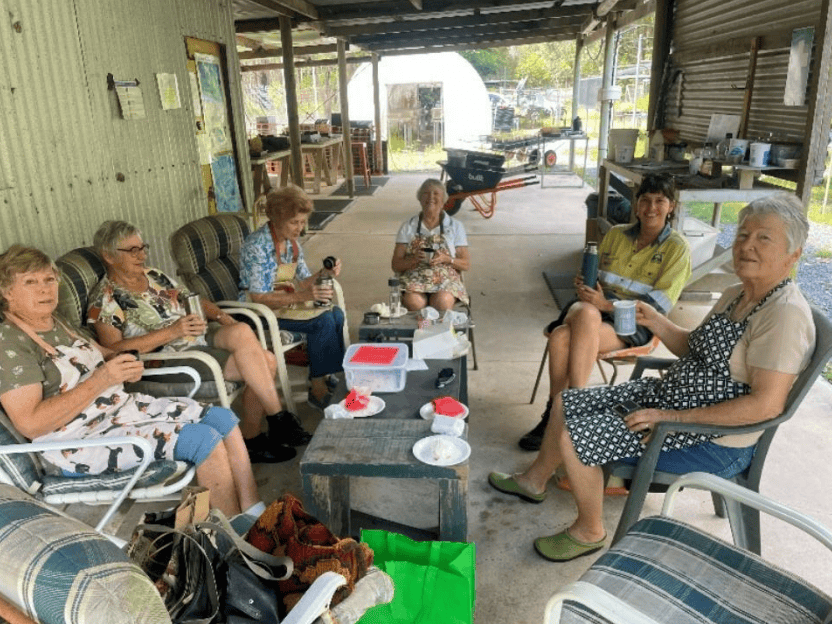
The Potters’ Club on a well-earned tea break! Credit: Noosa and District Landcare
Funding helps native plant nursery grow
In total, 18,602 trees have so far been planted through on-ground NRRP projects.
In 2024-25 Greening Australia‘s Mulgrave Catchment Riparian Restoration Recovery project, worked with the Madjandji Aboriginal Corporation and the Mulgrave Landcare and Catchment Group.
NRRP funding has helped the Mulgrave Landcare Community Nursery to increase production. A new coordinator has enabled more weekly volunteer sessions at the nursery, boosting native seedlings going to revegetation sites.
In 2024–25 alone, NRRP funding was behind the planting of 2,120 trees, 405 nursery volunteer hours and 45 nursery and tree planting events for the Greening Australia project.
“The nursery is a really good open space where we all get to learn and share with one another, a mix of people from all ages and all walks of life,” Nursery Coordinator Alicia Maybir said.
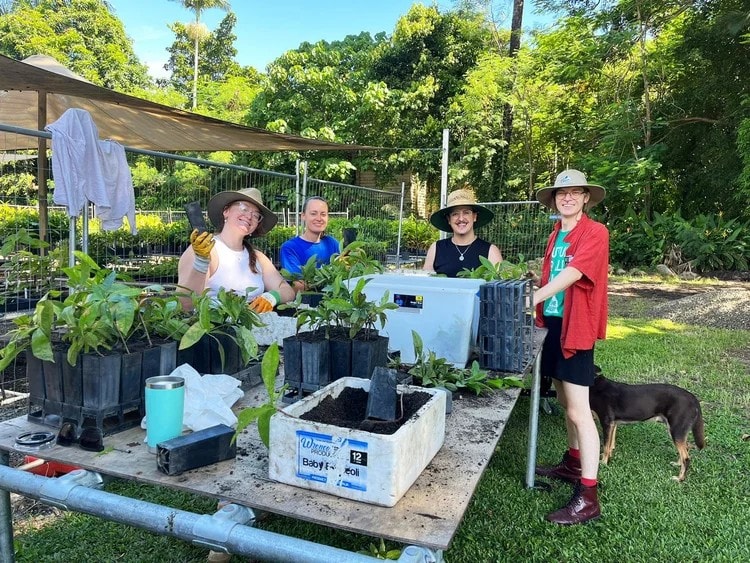
Mulgrave Landcare Community Nursery. Credit: Mulgrave Landcare and Catchment Group
Working together to help communities
More than 220 community events have been delivered as part of NRRP, including Healthy Land & Water’s Fire Management Planning Workshop for local landholders in South-east Queensland’s Kerry district.
The workshop brought neighbours together to build their own property fire management plans and to consider how coordinated, cross-boundary strategic burns can enhance the health of the broader landscape. This cooperative approach helps reduce fuel loads and supports biodiversity and landscape-scale fire resilience.
The Queensland Government has provided more than $38 million in grants to Queensland-based not-for-profit organisations under the Natural Resources Recovery Program.
NRRP project outcomes are tracked through the State-wide Indicators Framework , which provides consistent methods and tools for collecting impact data. This story uses NRRP data collected from July 2022 to December 2025.
These projects are funded by the Queensland Government’s Natural Resources Recovery Program.