NRM Regions Queensland CEO Chris Norman recently visited Thursday Island (Waiben) to spend a couple of days with the Torres Strait Regional Authority’s Land and Sea Management Unit (LSMU), Queensland’s — and Australia’s — northernmost regional NRM organisation.
The visit began with Chris meeting Acting TSRA Chair Patrick Mooka and CEO Charlie Kaddy, who shared the deep cultural history of the Torres Strait (Zenadth Kes) and its important role in regional trade routes.
TSRA is responsible for more than 270 islands and reefs, of which only 17 are inhabited. Some of the most northerly islands are only a few kilometres from Papua New Guinea – which can be seen from the shoreline.
Meeting the TSRA Land and Sea Management Unit
Chris then met with LSMU staff, including Land and Sea Program Manager Dr. Billie Roberts and Senior NRM Officer Simon Tedder, to find out how the team embeds Traditional Ecological Knowledge into all their projects, which are co-designed with Traditional Owners.
These projects are delivered through one of Australia’s largest Indigenous ranger teams, supporting up to 60 First Nations ranger roles, including 18 female rangers.
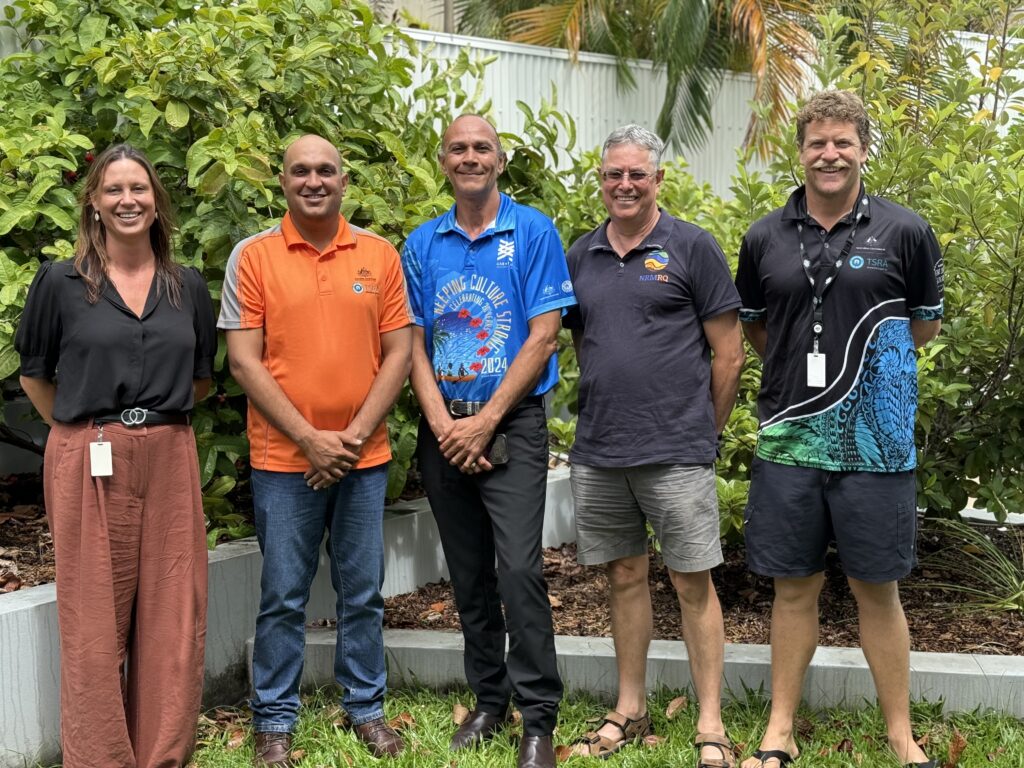
Dr. Billie Roberts, Acting TSRA Chairperson Patrick Mooka, TSRA CEO Charlie Kaddy, NRMRQ CEO Chris Norman and Simon Tedder.
Protecting a globally significant region
The Torres Strait is also the northernmost point of the Great Barrier Reef. Chris learnt about the rangers’ work on dugong, turtle, and seagrass management, which is helping to support Reef resilience further south, where water quality and sediment remain major pressures.
Other key LSMU initiatives include:
- Critical revegetation programs — supported through their own nurseries.
- Turtle monitoring — tracking the impact of climate change and erosion on populations and nesting sites.
- Crown-of-thorns starfish control — with more than 10,500 removed across four key reef areas.
Consistent with tropical islands across the world, the region is a biodiversity hotspot. Three species ‘new’ to science — one gecko and two frogs — were recently discovered on Dauan Island with help from TSRA Rangers.
At the same time, the Torres Strait faces significant invasive species pressures from cane toads, rats, pigs, dogs, and cats. This presents an opportunity for Queensland to capitalise on low-hanging conservation outcomes.
“Island-based ecosystem restoration actions, such as removing invasive species, are far more affordable and long-lasting than similar initiatives on the mainland, with dramatic outcomes for biodiversity and increased resilience to climate change,” said Senior NRM Officer Simon Tedder.
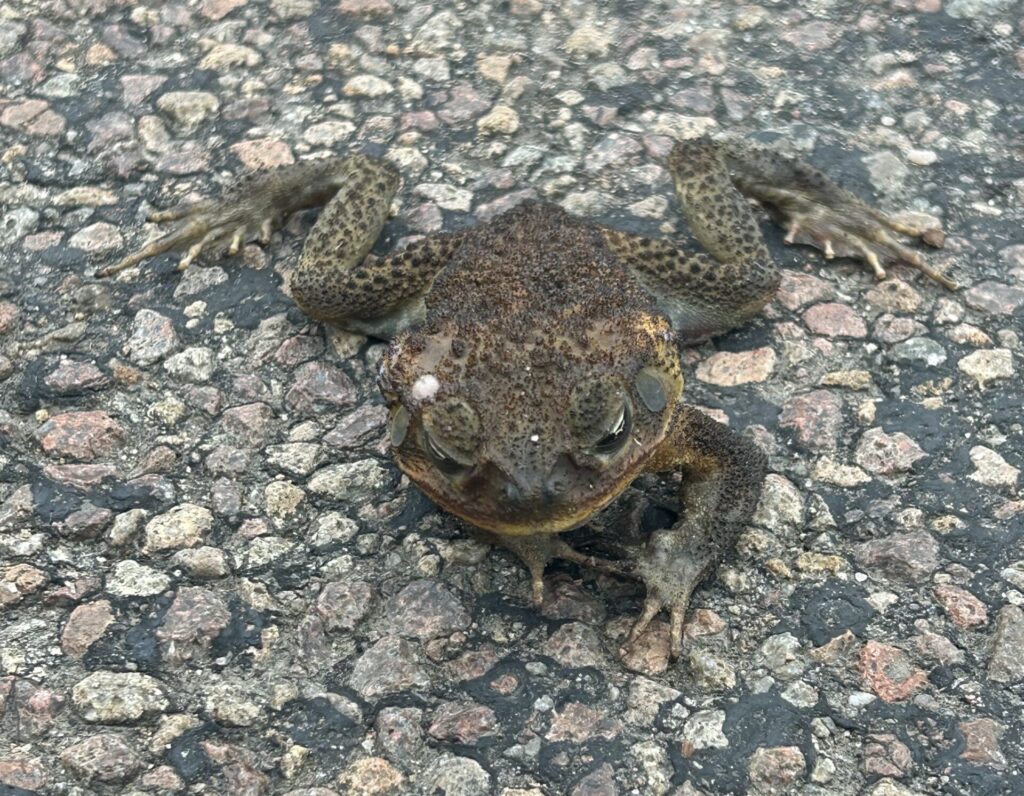
Cane toad on Thursday Island.
A unique landscape
Reflecting on the visit, Chris said the work of TSRA and its ranger team highlights the vital role the Torres Strait plays in the state’s natural and cultural landscape.
“It was a great privilege to visit Thursday Island and be exposed to the challenges and the great NRM work being undertaken in this unique part of Queensland and Australia,” said Chris.
As a leader for environmental management in their region, TSRA is helping to:
- Build mainland awareness about their unique and remote region, rich in environmental treasures.
- Share their story by explaining the region, ideas and priorities they’re working towards.
- Create opportunities for local staff to learn, grow and strengthen skills in natural resource management.
Find out more about the work of Torres Strait Regional Authority by visiting their website.
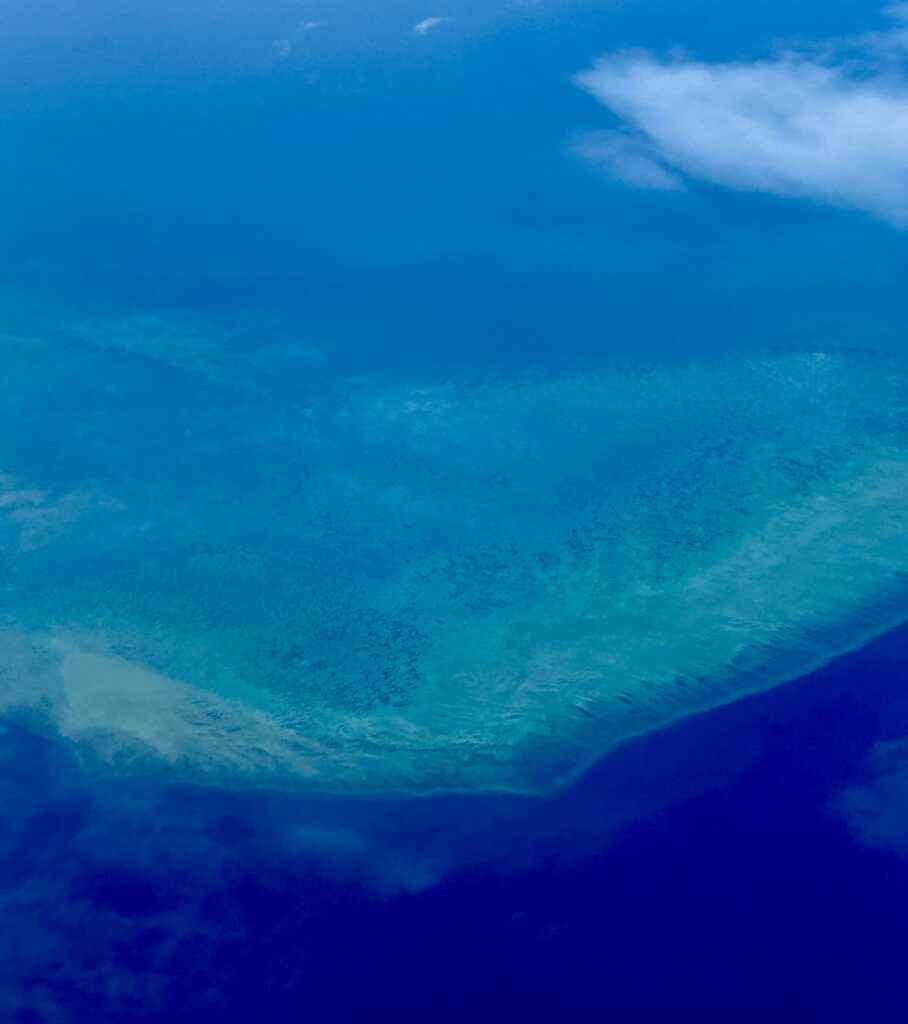
Aerial view flying over the northern Great Barrier Reef in the Torres Strait.